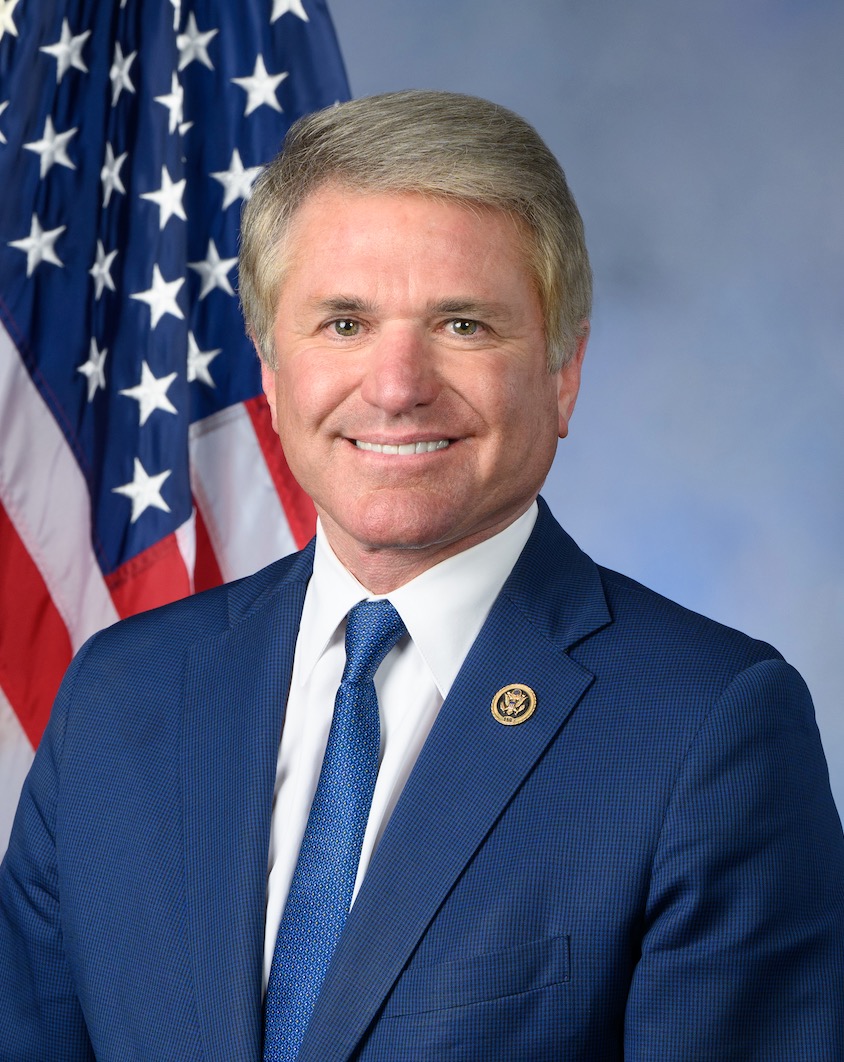
Understanding the Financial Landscape of a Congressional Leader: The Story Behind Michael McCaul's Wealth
In the complex world of American politics, the financial portfolios of elected officials often come under scrutiny, offering a glimpse into the diverse backgrounds that shape our leadership. Among the wealthiest members of Congress, Michael McCaul stands out. As a long-serving U.S. Representative for Texas's 10th congressional district, McCaul's journey from a legal career to a prominent political figure is noteworthy. However, what truly distinguishes his profile is the substantial foundation of his personal wealth. The question, "How Michael McCaul Became One of Congress's Richest Members," leads us not just through his legislative accomplishments, but deep into the unique circumstances that underpin his considerable michael mccaul net worth.
McCaul, a Republican, has been a fixture in the House of Representatives since 2005, carving out a significant career marked by leadership roles such as Chairman of the House Committee on Homeland Security and later, Chairman of the House Committee on Foreign Affairs. Before his congressional tenure, his professional life was rooted in law, serving as a federal prosecutor and eventually as the Chief of Counterterrorism and National Security for Texas’s branch of the U.S. Attorney’s office. While these roles are prestigious and well-compensated, they don't fully explain the magnitude of his current financial standing. The true cornerstone of Michael McCaul's impressive net worth lies in a less conventional source for a politician: inherited wealth.
The Cornerstone of Fortune: Tracing Michael McCaul's Net Worth
To truly understand Michael McCaul's financial trajectory, we must look beyond his congressional salary and examine the unique circumstances of his family. Financial disclosure reports, which are mandatory for all members of Congress under the STOCK Act, provide an invaluable, albeit estimated, window into their assets and liabilities. Based on his latest financial disclosures, Michael McCaul’s net worth is estimated to fall within a substantial range: between $157,830,685 and $223,151,052. This places him firmly among the wealthiest individuals serving in the U.S. Congress, a status that sparks considerable public interest and discussion.
The primary driver of this immense wealth isn't McCaul's political or legal career earnings, but rather his marriage to Linda Mays McCaul. Linda is the daughter of Lowry Mays, the visionary founder of Clear Channel Communications. Clear Channel, a media conglomerate that evolved into iHeartMedia (NASDAQ: IHRT), was a powerhouse in radio broadcasting, outdoor advertising, and live entertainment. Lowry Mays built an empire, and his family, including Linda McCaul, inherited a significant portion of that fortune. This inheritance forms the bedrock of Michael McCaul's reported wealth, illustrating how personal connections and familial legacies can profoundly shape a public servant's financial profile.
The concept of inherited wealth in politics often sparks debate. On one hand, it can potentially free a politician from financial pressures, theoretically allowing them to focus entirely on policy and public service without the need to generate income or rely on external financial support. On the other hand, it can raise questions about relatability to the average constituent, whose financial struggles might be far removed from the daily realities of someone with such a substantial personal fortune. Understanding this dynamic is key to comprehending not just the figures, but the broader implications of McCaul's financial standing.
A Deeper Look into His Asset Portfolio: A Glimpse at Diverse Holdings
Michael McCaul's financial disclosure reports reveal an extensive and diverse portfolio, predominantly composed of assets rather than liabilities. With no disclosed liabilities, his reported net worth is a direct reflection of his significant asset holdings. The sheer volume and value of these assets are striking; out of all his reported holdings, over 50 individual assets are valued at more than $1 million each. This suggests a sophisticated and well-managed investment strategy, likely overseen by professional financial managers.
His portfolio primarily comprises interests in various limited partnerships and real estate ventures, hinting at a strategic focus on long-term, tangible investments. Some of the notable assets include:
- Countryside Plaza LTD: Likely a real estate or investment partnership.
- Southwest Junction LTD: Another investment vehicle, potentially with real estate or land development ties.
- MZG Net Lease Funding LTD: Suggests involvement in net lease real estate, where a tenant is responsible for property expenses.
- MZG Real Estate LTD: A direct indication of significant real estate holdings.
- Sasco/El Prado Steel: Possibly an investment in an industrial or manufacturing entity, or real estate related to such operations.
These types of holdings indicate a strong leaning towards private equity-like investments and real estate, often managed through complex limited partnership structures. Such investments are typically less liquid than publicly traded stocks but can offer substantial returns over time. The lack of disclosed liabilities further underscores the robust nature of his financial position. These disclosures, mandated by the STOCK Act, aim to promote transparency, allowing the public to see the financial interests of their elected officials, even if exact dollar figures are often reported in broad ranges. For a more granular breakdown of his holdings, you can refer to Unpacking Michael McCaul's Finances: Assets from Disclosure Report.
Navigating the Waters of Political Finance: The Meta Controversy
Even with a robust financial foundation, the management of a politician's personal investments can occasionally lead to public scrutiny. A notable instance occurred in April 2024, when Michael McCaul purchased approximately $350,000 worth of Meta (NASDAQ: META) stock. This transaction raised eyebrows because it took place shortly before Congress was slated to vote on a bill that could potentially ban TikTok in the United States. Critics quickly pointed out that a ban on a major competitor like TikTok could significantly benefit Meta, the parent company of Facebook and Instagram, by reducing competition in the social media landscape.
The timing of the purchase fueled suspicions of potential insider trading, or at the very least, a conflict of interest. The ethical implications were clear: could a public servant's personal financial gain influence their legislative decisions? In response to the controversy, McCaul’s spokesperson clarified that the trades were executed by a third-party investment manager, not directly by McCaul himself. McCaul also stated that his actions and voting decisions were not, and would not be, influenced by any potential financial gain from such investments. While such arrangements with third-party managers are common among wealthy individuals and politicians to avoid direct conflicts, the incident highlighted the constant tightrope walk politicians must perform when their legislative duties intersect with their personal financial portfolios.
This episode serves as a powerful reminder of the delicate balance between personal wealth management and public trust. Regardless of the legality or McCaul's intentions, the perception of potential financial gain influencing policy decisions can erode public confidence. It underscores why financial disclosures and transparency measures, despite their imperfections, are crucial for maintaining accountability in government.
Wealth, Influence, and Public Service: The Broader Context
Michael McCaul’s significant michael mccaul net worth places him in an exclusive group within the U.S. Congress, making him one of the nation's wealthiest representatives. His financial standing prompts a broader discussion about the role of wealth in American politics. Does substantial personal wealth make a politician more independent, less susceptible to external pressures, and able to focus purely on public good? Or does it create a disconnect, making it harder for them to genuinely understand and represent the financial struggles of their average constituents?
For individuals like McCaul, who come from backgrounds of inherited wealth, the financial security can theoretically allow them to pursue public service without the typical financial anxieties that might plague other elected officials. This can be viewed as an advantage, enabling them to make decisions based on conviction rather than personal financial need. However, it also means their experiences and perspectives on economic policy, healthcare, and social safety nets may differ vastly from those of the majority of Americans.
The ongoing public interest in the finances of politicians is a testament to the importance of transparency in a democratic society. Disclosures, like those filed by McCaul, aim to shine a light on potential conflicts of interest and ensure that public officials are accountable to the citizens they serve, rather than to their own financial interests. Understanding the detailed financial picture, from the origins of their wealth to their investment strategies, is vital for voters seeking to make informed decisions about their representation.
Conclusion
Michael McCaul's journey to becoming one of Congress's richest members is a testament not only to his extensive career in law and public service but, more significantly, to the substantial inherited wealth that forms the foundation of his estimated $157 million to $223 million net worth. Through his wife, Linda Mays McCaul, he is connected to the legacy of Lowry Mays and Clear Channel Communications, providing a unique financial bedrock. His diverse asset portfolio, largely comprising real estate and private investments, reflects a sophisticated approach to wealth management. While his political career has been marked by significant leadership, a recent controversy surrounding Meta stock purchases underscored the perpetual challenges politicians face in balancing personal financial management with public trust and ethical conduct. Ultimately, the story of Michael McCaul's net worth offers valuable insights into the intersection of personal wealth, political power, and the ongoing demand for transparency in American governance.
